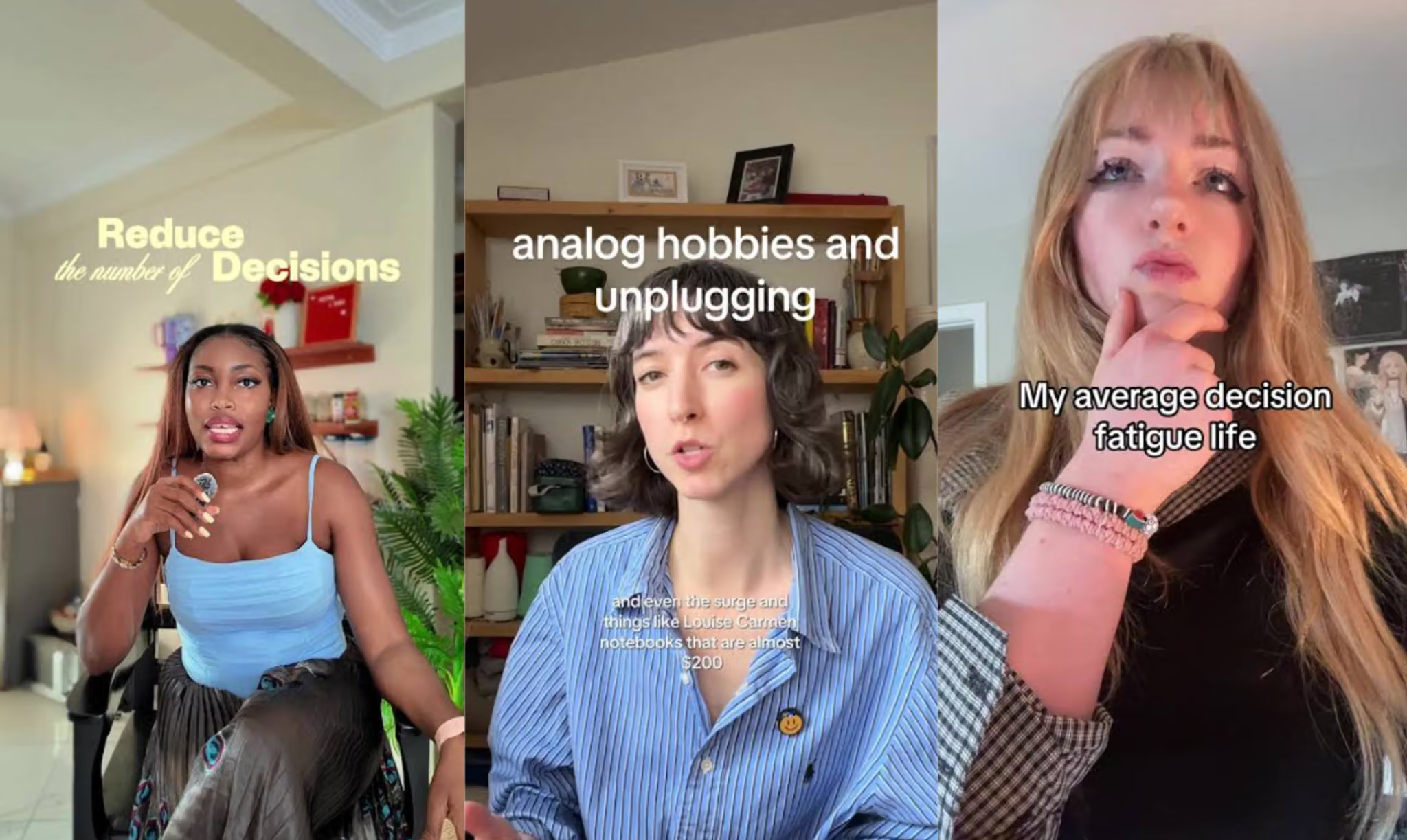
More choice doesn’t always mean more freedom, as consumers seek ways to switch off from everyday decisions. Could brands find value in taking some of the choice off their hands?
This week, I found myself in a particularly snazzy restaurant in London, where one of the things everyone raves about is its personalised bar service. A waiter asks about your typical flavour profile – sweet, savoury, sour, etc. – and the bartender then crafts a cocktail around it. I watched him bustle around his station, flipping shakers before giving the drink a theatrical shake, as I waited in anticipation to see what concoction he made specifically for me. By the time it arrived, I was excited for that first sip – and it was exactly what I wanted: sharp, sour notes with a hint of sweetness. He gave me exactly what I wanted with one question. I didn't have to flip through a leather-bound menu, weigh up my options or make a decision on the spot. The cognitive load of choosing was taken off my hands, and, frankly, I liked it.
This desire to be offloaded from choice is being felt across industries at a time of choice overwhelm, decision fatigue and general uncertainty. Rather than sitting with the discomfort that can come with endless options, we increasingly want to be told what to choose. In fact, 76% of people feel overwhelmed by too many choices, and 77% say that they value products and services that reduce friction in their daily lives. The vibe is clear: making fewer decisions is becoming more desirable than having endless choice, and switching off from the burden of choosing, deciding and managing is increasingly appealing. But why?
Choice as a burden
Which streaming service should we put on? Which restaurant should we go to for dinner? Which product do we buy when they all claim to do the same thing? – something that became particularly apparent in the recent controversy around Fenty Beauty and Huda Beauty releasing strikingly similar under-eye patch products.
Choice has both become a privilege and a barrier. While personalisation aimed to help us navigate abundance, it has often created more options to still sift through. As a result, curation is starting to win out over abundance – people don't necessarily want 50 products to choose from, but a tastemaker or platform to simply guide them on which one to pick. As noted in our Lucid Living macro behaviour: “People are rejecting automated recommendations for more considered ways to discover and consume.”
The ultimate convenience is not having to decide
The desire to be unburdened by choice goes beyond making tasks quicker or easier and instead involves delegating the decision itself. AI is increasingly positioned as the problem solver here, operating as a personal assistant/decision layer rather than simply a search tool. Indeed, 31% of regular LLM users in the UK use them for personal/emotional support, including talking through problems and getting help with decisions. And AI agents are moving beyond answering to acting, from booking travel and managing calendars to shopping, accessing emails/messages and more.
Yet, there’s a limit to how much people are willing to hand over. While one study finds 60% of Britons say they would stop using an AI agent after just one mistake, another suggests 58% of US shoppers trust AI to find the best deal on a product and 50% trust it for product reviews. This distinction suggests that people may be comfortable delegating bounded decisions, but not necessarily surrendering control altogether.
But how much of ourselves do we actually want to switch off?
While switching off and ease are desirable, there is a growing backlash against over-reliance on AI and how that relates to a loss of human expertise, creativity and agency. Roughly 39% of people in the US say AI is negatively affecting society – the highest level recorded in their polling. We've already seen concerns about students outsourcing thinking and writing, people using AI instead of developing skills, and AI-generated content making the internet feel increasingly synthetic. People are also deliberately seeking out more analogue experiences, from vinyl listening bars and film photography to pottery classes, crochet circles and screen-free socialising. Mastercard has identified ‘analogue escapism’ as a growing UK experience trend, while 24% of Britons now own a vinyl record player, including 18% of Gen Z.
The interesting contradiction is that we want technology to remove the boring thinking, but we're increasingly protective of the thinking we actually value. That’s where the boundary around being unburdened exists. The question for brands becomes: What should people be allowed to switch off from – and what should they never have to switch off from? Because the opportunity goes beyond making life effortless and is moving towards friction that people don’t value, while still protecting the effort they do.
What does this mean for brands?
As people become overwhelmed by options, brands can create value by narrowing the field, rather than continually adding more products, features or personalisation. This could include building services that curate, recommend or automate routine decisions – from ‘best for you’ bundles to auto-replenishment and AI-assisted planning. Spotify’s daylist and Discover Weekly, for example, turn an overwhelming catalogue into a personalised shortlist, while Amazon’s Subscribe & Save removes the need to repeatedly remember and reorder everyday essentials.
The backlash against AI also suggests people don't necessarily want everything done for them – they want low-value effort removed while retaining control over what feels meaningful. Brands can use automation to handle repetitive, administrative or frustrating tasks, while leaning into preserving human expertise, creativity, discovery and choice where these add value. This could mean making human interaction a feature rather than a point of friction, or letting people choose the level of automation they want.
The sweet spot is feeling catered to without being overwhelmed – free of friction, yet in control of what matters. Because sometimes being unburdened isn’t about having fewer choices, but having the certainty that someone else has taken care of the ones that don’t need your attention.
Want to find out more?
Explore the Expert Outlook 2027 research to dive deeper into The Unburdening. Discover how this collective yearning for ease is shaping audience expectations, unpack what it means for your brand across 15 key sectors, and access tools to help you apply these insights directly to your business challenges.
Ready to find your way to ease? Sign up here
