Millennial-coded aesthetics and moments are on the rise – but what’s fuelling this shift back to a millennial pink-tinged past that feels increasingly hard to leave behind?
If you tuned into Coachella this year, you probably noticed a common theme: millennial nostalgia. Young Thug lit up the stage, performing hits from ‘Lifestyle’ to ‘Pick Up The Phone’. Swae Lee turned the vibes up a notch, performing back-to-back Rae Sremmurd tracks, including ‘No Type’ and ‘Black Beatles’. And one can’t forget the euphoria we all collectively felt watching British band Disclosure perform ‘Latch’ to hundreds of thousands of sweaty Coachella attendees, while we watched enthusiastically at home, reminiscing about where we were when that song came out.
The Californian festival was a true nostalgia-fest and served as a visceral example of the millennial optimism trend that has grown on social media, as Gen Yers reflect on the early-2010s and Zers romanticising the time with grainy house-party pics, Apple Photo Booth selfies, owl-print tops, ballet flats, finger ‘stache tattoos and lots of avocado toast (I remember, I was there).
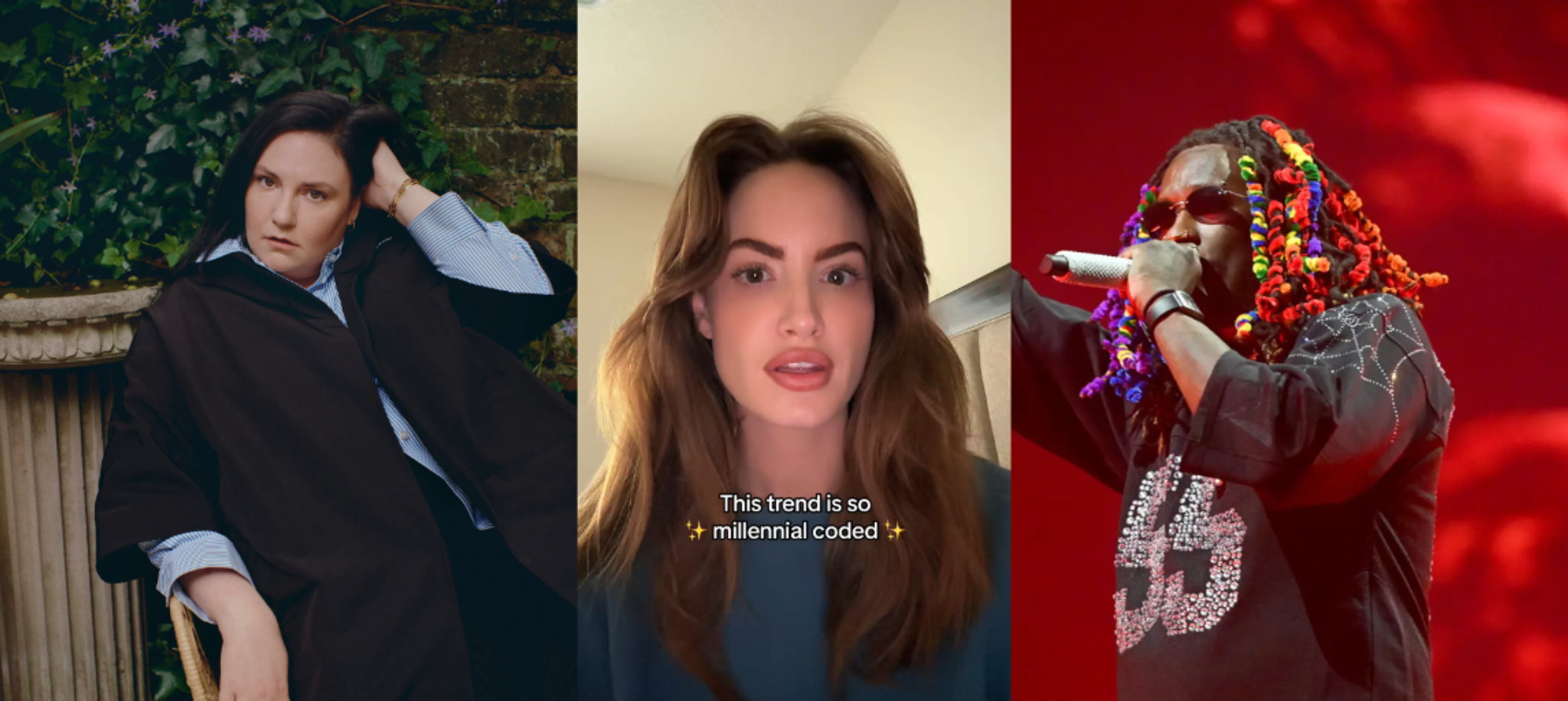
But it’s not just Coachella that’s bringing about the millennial vibes. Gen X and Gen Y are gearing up for a summer that will see Jay Z headline Roots Picnic and perform three headline shows in New York to celebrate the anniversary of his albums Reasonable Doubt and The Blueprint. On the pop side of things, Madonna will be releasing Confessions II – the follow-up to the iconic 2005 album Confessions On A Dancefloor – this July. And it expands beyond music – Lena Dunham’s memoir Famesick is prompting renewed reflection on Girls, while Hannah Montana’s 20th anniversary is inspiring millennials to throw on a wig and sing their best rendition of ‘Best of Both Worlds’ (a classic if you ask me). Add to that tours from both Hilary Duff AND Demi Lovato, and it’s clear that millennial-era pop culture is so back.
Meanwhile, Time Out reports that the ultimate 2010s snack – Froyo – is making a comeback just in time for summer, with a new wave of “chic fro-yo shops turning the nostalgic 2010s treat into a social status symbol – complete with pistachio drizzle, curated playlists and $10 cups.”
From music to pop culture to even snacks, it’s clear that millennials are having a moment – but what’s driving this cultural resurgence?
Simpler times
There’s no denying that the 2020s have been rough. From COVID-19 to an ongoing cost-of-living crisis, ICE deportations to the Iran-war – things have, without a doubt, been challenging. In fact, Britons were 37% pessimistic vs 31% optimistic heading into 2025, and 60% say the 2000s were better than today. In the US, only 25% of Americans believe they can improve their standard of living – a near-historic low.
Against this fraught socio-political backdrop, the 2010s are starting to feel like a beacon of simpler times. And with millennial culture at its core, the products of that era – from tech to music and fashion – are becoming tangible artefacts, anchoring the 2010s and capturing the emotional and aesthetic logic of the time. As Meg Walters wrote for Glamour: “The 2016 trend on social media has everyone nostalgic for what now seems like a happier, simpler time. A time when social media was a pleasant sea of cool-toned purple filters and grainy iPhone pics; when ‘Closer’ by the Chainsmokers and Beyoncé’s Lemonade blared from our (stringed) Apple headphones.”
But this throwback to the 2010s and millennial-coded products doesn’t just serve as a nostalgic lens into the past for Gen Y, but a sense of collective yearning for Gen Z, too. “The Gen Z girlies are watching Sex and the City and living their best Carrie Bradshaw lifestyles,” writes Remy Tumin and Claire Moses for The New York Times. “Those Facebook albums of blurry photos of a night out? They’re back, repackaged as an Instagram ‘photo dump’. Ditto for big hair and wired headphones.”
As our Nostalgia Reimagined macro behaviour notes: “Nostalgia is a gateway to no-strings, no-stress joy, with people revelling in the familiar as a coping mechanism in turbulent times. Offering escapism with recognisable elements, throwback culture is burgeoning” – and increasingly, it’s not just about looking back, but recreating the emotional ease, simplicity and sense of control that the past now represents.
Lo-fi experiences
Digital fatigue has well and truly set in; around 50% report feeling tired after extended online sessions, with only a small minority feeling energised, and 70% of people feel tired, drained, or exhausted after long screen use. This links to a broader desire for authenticity over automation and opting for more lo-fi tech and experiences that lean into that which defined the 2010s, from old iPhones and wired headphones to grainy cameras. Why? Because they feel more tactile, less performative and less ‘always on’ – allowing people to tap into a way of living that feels less digitally saturated and more intentional. This issomething more people are seeking – 50% of Americans are intentionally reducing screen time, and more Americans are opting into analogue hobbies like reading physical books, writing by hand and using paper planners.
As constant connectivity increasingly leaves people feeling drained rather than energised, these ‘milennial-era’ formats and objects appeal because they represent a slower, more finite way of engaging with an overstimulating world. Our report on the Science Of Analogue Agency taps into this: “Although efficiency and speed are often desirable for consumers, sometimes ‘sticky’ experiences are preferable…consumers [are] intentionally seeking slower, more effortful experiences to restore agency, mastery, and human touch.”
So, with a desire for simpler times and even simpler tech, what does this mean for brands?
Act as anchors in a fragmented culture
As culture fragments into algorithm-driven micro-audiences, brands can increasingly act as stabilising reference points by rebuilding pockets of collective recognition through nostalgia and repeatable cultural codes. Kodak is a strong example of this – it recently leaned into its analogue heritage, re-centring film photography and disposable cameras as desirable objects in a digital-heavy world. Similarly, brands like GAP and Marc Jacobs have revived 1990s and 2010s aesthetics, not just for style but for instant recognisability. In this context, brands function less as targeted messages and more as cultural anchors that reintroduce shared meaning.
Help people feel in control
Nostalgia continues to resonate with audiences because it restores something missing in today’s environment – a sense of control and clarity. In contrast to infinite, algorithm-driven feeds, nostalgic formats feel familiar and emotionally legible. Across categories, brands can respond to this cognitive overload by offering simpler, contained and emotionally grounding experiences. Stationery brand Papier does this well; it’s scaled rapidly by offering a counterpoint to digital saturation, with its growth tied to demand for tangible, low-friction creative tools like notebooks and planners that reintroduce structure into everyday life.
With a sense of 2010s optimism in the air and a desire for IRL experiences and slower tech, this summer is looking like Tumblr dashboards, grainy iPhone 5 photos and leaning heavily into the present – and I’m looking forward to it.