From runfluencers to Hyrox, fitness has become something to watch as much as to do. As self-optimisation turns into performance, a backlash is building – but when did working out stop being personal and start becoming something we perform?
From runfluencers to Hyrox, fitness has become something to watch as much as to do. As self-optimisation turns into performance, a backlash is building – but when did working out stop being personal and start becoming something we perform?
You open TikTok and scroll through countless videos. One shows a group of sweaty and shockingly ripped people powering through an assault course – drenched, determined and totally locked in. Then you see another. And another. And another. What you’re witnessing is Hyrox, the global fitness race that has quickly become a must-do on every fitness enthusiast’s list.
So much so that in 2025, they hosted over 80+ global races, attracting over 550,000 athletes and 350,000 spectators. Events now sell out within hours and sometimes require ballot systems, highlighting how it’s exploded globally, driven largely by social media, identity-building and highly aestheticised participation.
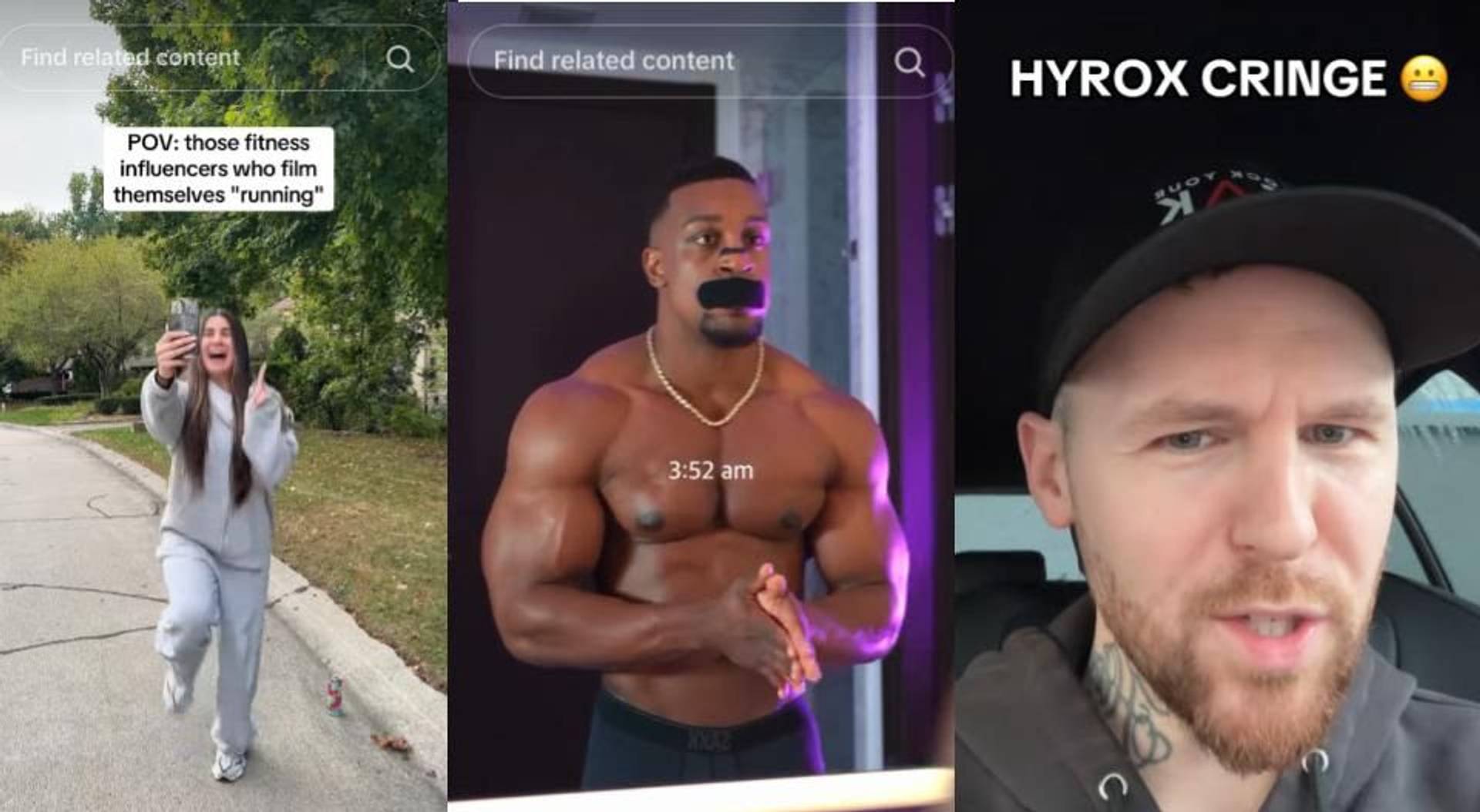
But the popularity of the fitness competition hasn’t gone without criticism. On social media, backlash has spread rapidly. Influencer Max Balegde called it “a cult” while content creator Max Heath called the competition “cringey” and criticised it for being "full of athletes on steroids, people cheating and not following the rules, a weird ego attached to people who compete and think they're better than gym goers."
This ‘cringeification’ of Hyrox reflects a broader shift in the health and fitness sector, from improving one’s life to what some see as self-optimisation overload. However, the criticism isn’t really about working out itself – it’s about the performance of it and the status markers tied to it, such as travel, gear and overall lifestyle expenses. And Hyrox is far from the only example.
The great running boom of the 2020s has spawned countless run clubs, collectives and communities. There were over 1.1 million applications for the 2026 London Marathon, up from 840,318 in 2025, and 36% of the UK population runs twice or thrice a week. Meanwhile, run clubs on Strava saw a 59% increase in membership in 2024.
But most recently, runfluencers are facing backlash over injuries, unrealistic lifestyles and lack of transparency, with critics pointing to privilege and unsustainable training being positioned as accessible. In a feature for Dazed, writer Chloe Gray noted that “concern, fatigue and resentment about the running creator industry had already been building, fueled by controversies such as an influx of injuries, falsified marathon times, and AI-generated training plans.”
This reflects a growing frustration around aspiration versus relatability. These influencers live like semi-professional athletes but position their lifestyles as something easily achievable for everyday people. From runfluencers documenting every kilometre to Hyrox competitors turning races into content, fitness has shifted from something you do to something you present. And as performance becomes more visible, more aestheticised and more monetised, it begins to feel less like discipline and more like spectacle. But why is that?
Aspiration meets saturation equals backlash
Fitness content often follows a recognisable template: familiar route shots, matching gym sets and medal selfies, all optimised for social media. As these formats scale and become increasingly templated, they flatten into a form of algorithmic sameness. This isn’t specific to just fitness, though – it’s a familiar lifecycle of internet culture – aspiration breeds imitation, imitation creates saturation, and saturation invites backlash.
The running boom itself has amplified this, reflecting just how mainstream the category has become. But with scale comes scrutiny, and questions around authenticity begin to intensify. Fitness – and fitness content – starts to feel less like lived experience and more like the performance of fitness itself.
Self-optimisation fatigue
The backlash around fitness trends like Hyrox or run clubs is also happening in the context of years of self-improvement content dominating social media. After years of #ThatGirl content, 5-9 morning routines, lifestyle extremists and punishing self-improvement fads, fitness has become entangled with a broader trend to constantly optimise everything. Platforms and products like Whoop and Strava have helped quantify everything from recovery to output, reinforcing a mindset where progress is often measurable and visible to the masses.
But the appetite for this is waning. We saw this with memes mocking fitness influencer Ashton Hall’s extreme morning routine, which sparked anti-optimisation satire. What’s being rejected isn’t fitness itself, but the idea of optimisation as identity – where working out is no longer just a habit, but a performance of self-control, discipline and ultimately, worth.
Cringe as a cultural defence mechanism
While the ‘cringeification’ of fitness may be growing, it’s important to understand that calling something ‘cringe’ is rarely just about taste – it also operates as a form of distancing.
As fitness becomes more visible, performative and tied to identity, people are pushing back. But not necessarily against training in general, but against the pressure to turn everyday behaviours into content.
This is particularly clear among younger audiences. Eventbrite reports that 74% of Gen Z in the UK and US think in-person experiences are more important than digital ones, signalling a broader desire to step away from constant self-documentation. In this context, ‘cringe’ becomes a subtle refusal to perform, optimise or participate in the same system.
What does this mean for brands?
Fitness marketing often centres on hyperdiscipline and elite performance that align with what we see on social media: early mornings, strict routines, peak output. But this increasingly reads as unrealistic and exclusionary.
Brands should pivot towards something more human: inconsistency, balance and real-life context. Progress that isn’t linear and routines that flex and fit around people’s realistic schedules. Lululemon’s 2025 “Made to Feel” campaign did this well by deliberately moving away from high-performance ideals to focus on imperfect, everyday movement, from first attempts to casual workouts. The campaign positioned fitness as emotional and experiential rather than competitive, tapping into Gen Z’s desire for “realness” over perfection.
The aestheticisation of culture has also meant many brands have leaned into aesthetics and lifestyle visuals. But that visual language needs to evolve so that it reads less like performance and more like authenticity – particularly at a time where algorithms are flattening culture. For brands, this shift is about moving away from this level of polish and instead framing fitness as something that feels functional, embedded in everyday life and less staged. That can be through showing effort in less controlled environments.
Ultimately, improving fitness and bettering ourselves isn’t the problem, but when fitness becomes something performed for the viewer, something shifts. It’s not fitness that becomes cringe, but it seems the act of performing it sure does.