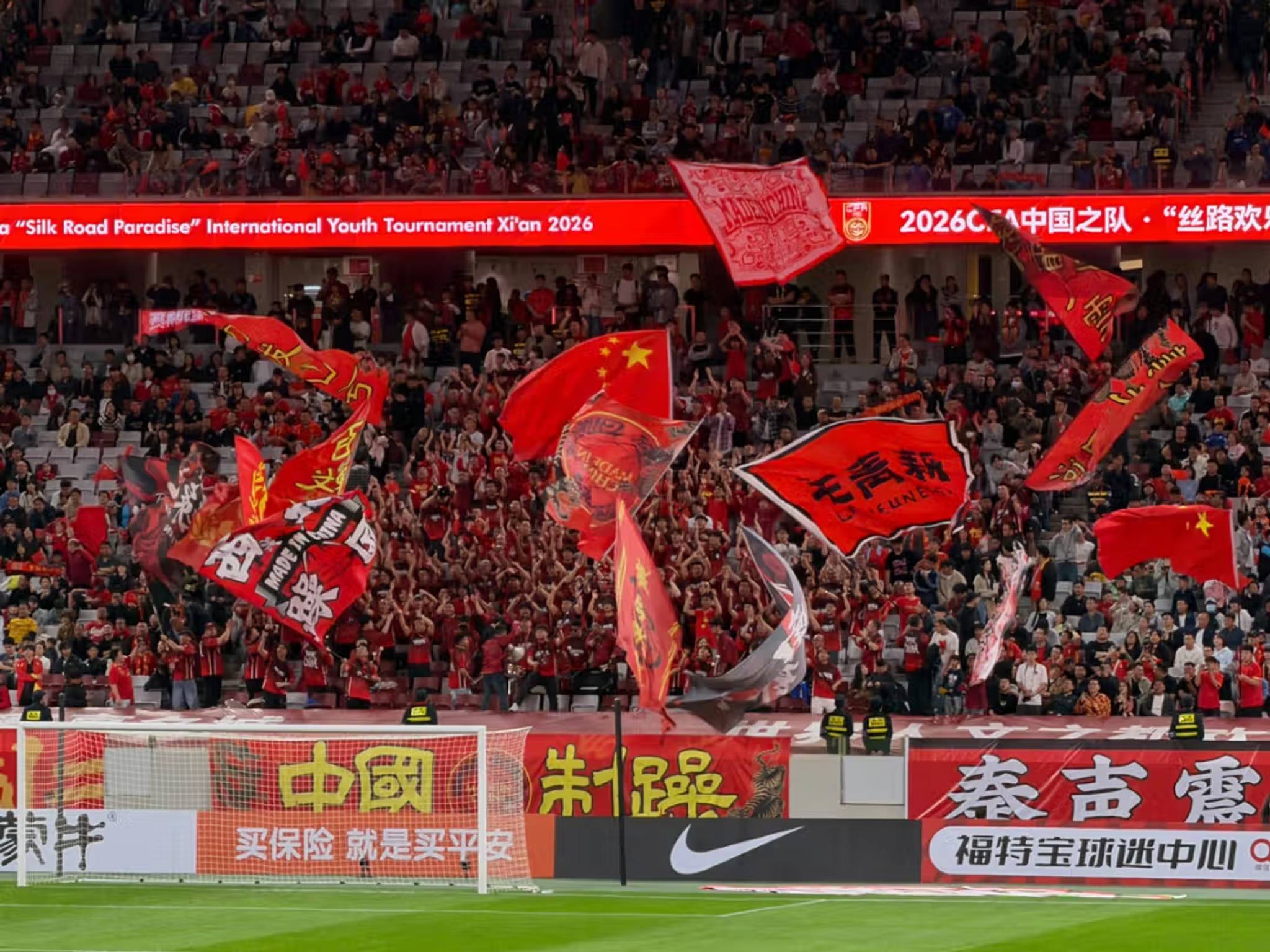
Asian sports fans are in the middle of a transition. No longer satisfied with the sidelines, they seek more opportunities to engage with sports. Fans champion homegrown heroes and enrich new but thriving local sports scenes. How can brands tap into this now to ensure loyalty from fans in the future?
Data
Among Chinese football fans, 33.7% watch a match every two to three months, and 11.7% only watch highlights
The municipal soccer competition Su Super League in Jiangsu, China, saw over 2.43 million stadium attendance across the 2025 season, averaging over 28,000 spectators per match
Manchester United counts both India and Indonesia as its top fanbases, with 10.1% of global web traffic each coming from the two Asian countries
Scope
Asia’s sports fandom scene is in the middle of a transition. No longer satisfied with the sidelines, they seek more opportunities to engage with sports. That’s what Martin Zhang, Shanghai-based global business director for Jung von Matt NERD, tells Canvas8.
Jung von Matt NERD is a creative and media agency for gaming, nerd-culture, fandom communities, Web3 and next-gen consumers. Being German-born Chinese with a particular interest in pop culture and sports communities, Zhang has the unique ability to observe the sector from both local and international perspectives.
“If you grew up in Europe, you like a team because that's your hometown or because you have a connection to the players somehow. Asian fans are now trying to find something similar,” he says. [1] This bid for localisation reflects in both practical and symbolic ways.
First, the practical – due to unavoidable time differences, many Asian fans of major sports leagues from the US and the UK have irregular viewing habits. Among Chinese football fans, 33.7% watch a match every two to three months and 11.7% only watch highlights. [2] Many also watch sports on social media platforms such as TikTok (or Douyin, in China), engaging with highlight reels and fan edits.
Now Asian fans are creating rituals of their own. They may not be able to attend matches in Europe’s iconic football stadiums or sit courtside with Timothée Chalamet and Kylie Jenner at an NBA game, but they can join online live streams and fan-organised parties.
This is where brands can come in. “Creating touchpoints before and after an event is becoming more important for brands. Brands want to find the next consumers, and they want to be where the communities are,” Zhang says, citing Heineken as an example. [1] During this year’s Chinese Grand Prix, the beer brand hosted a Formula 1 festival at Gate M, one of the hottest spots in Shanghai’s The Bund waterfront promenade.
It was created for all fans to enjoy, even those unable to watch the race, which was about an hour away. There was live music, a DJ and food and beverage offerings.
Then there are the more symbolic ways fans want sports to show up in their lives. Many seek representation, wanting to see themselves on the pitch, court or track.
Zhang says that one major challenge for teams and brands in Asia is inconsistent fan loyalty. “It sounds worse than I mean it to, but fans here often have two favourite clubs, for example.” [1] This isn’t for a lack of interest but a desire for stronger connections. Asian sports fans are more than willing to go all out in supporting athletes who make them feel represented on the world stage.
We see this in the rise in popularity of sports superstars, including Japanese baseball player Shohei Ohtani. Baseball is the most popular sport in Japan, and 50% of Japanese sports fans are very or somewhat interested in Major League Baseball (MLB), while 85% have at least some interest in the league. [3]
When it comes to teams, however, the Los Angeles Dodgers are far ahead in Japanese fandom – 59% of Japanese MLB fans say the Dodgers are their favourite, compared to just 14% for the Yankees and 9% for the Cubs (second and third ranked on the list).[3]
It’s no coincidence that the Dodgers have three of the top four most popular players among Japanese fans: Ohtani, Yoshinobu Yamamoto, and Roki Sasaki. [3] Roughly 59% of Japanese sports fans watched the 2025 World Series between the Dodgers and Toronto Blue Jays, with 86% rooting for Shohei Ohtani and the Dodgers. [3]
Similar hype exists in other sports, too, including for Filipino tennis player Alex Eala and Chinese skier Eileen Gu. “Having two clubs means it's also very easy to jump from one sport to another sport, then from one sport to music,” Zhang adds. [1] However, this may change as local leagues start to grow in popularity.
The Su Super League in Jiangsu, China, is a municipal soccer league that saw over 2.43 million stadium attendance across the 2025 season, averaging over 28,000 spectators per match. [4] According to Zhang, this is on par with the professional super league in China.
The Su Super League has also amassed over 2.2 billion in online streams. [4]According to official data, Jiangsu retail sales rose during match periods – 11.64 billion yuan (roughly $1.7 billion), up 34.7% year-on-year. [4]
For today’s sports fans, community is just as important as competition. Zhang says that when watching games or attending events, fans look forward to engaging with like-minded people.
“You come in, you have some inside jokes, you experience the same suffering from a loss 10 years ago that bonds you. You don't see them every day, but once you catch up, it feels like you’ve been through so much together. You have this nonverbal agreement or understanding.” [1] How can lifestyle and sports brands tap into this now to ensure loyalty from fans in the future?
Who are the sports fans in Asia today?
In Asia, it's typically Gen Z from Tier 1 cities like Shanghai, Tokyo and Seoul. We’re seeing female participation rise, specifically for sports like Formula 1, thanks to the entertainment aspect.
We had that movie with Brad Pitt last year and Netflix’s Drive to Survive, which provides behind-the-scenes access. For many sports fans in Asia, it's less about the race itself and more about the personas – the drivers and their lifestyles. Tennis is also a great example.
On one hand, playing tennis is so much fun, but the lifestyle aspect draws a lot of fans into the sport, too. As disposable incomes rise in China, Gen Z are looking not only to watch sports but also to be a part of it. Formula 1 and tennis managed to build this whole ecosystem and create more touchpoints for fans to engage with.
Why are APAC sports fans more interested in personas and less tied to specific sports or teams?
Asian fans have a different connection with these sports teams and players. I grew up in Hamburg, Germany, and it was common for parents to bring their kids to the stadium on the weekend.
That’s why there are so many football fans in Germany – it’s taught from a very young age. Motorsports, too. I remember sitting on the couch watching Formula 1 with my dad on Sundays. This is a different level of connection that’s missing from many Asian fans, and that's why it’s understandable that Asian fans follow athletes more.
How would you describe the current state of sports fandom culture?
It’s in a transition phase. If you grew up in Europe, you like a team because that's your hometown or because you have a connection to the players somehow.
Asian fans are now trying to find something similar. You see this in Japanese MLB player Shohei Ohtani. He’s a local hero for Japanese fans and a world-class player. This need for representation is rising in Asia. There's been a big change from passively consuming Western sports such as the NBA and Champions League to focusing more on local heroes.
There’s also a push for localisation, because you have this issue with the time difference, which is anywhere from six to seven hours in China. If you're talking about prime time in Europe, games are at 2 AM or 3 AM in China.
In the US, like the last Super Bowl, the last one was at 10 AM on a Monday. I took the day off to watch at a friend’s place, eat pizza and participate in that whole ritual. But of course, it’s a different feeling.
Now we’re seeing a growth of Asia-wide tournaments, like the East Asia Super League (EASL) in basketball. There are also different formats like half-court tournaments and three-on-three games, where Asian teams are very strong.
How are fans watching sports now?
Everything is mobile. It’s very common to have a second screen – you could be watching football on the TV, but at the same time, you’re on the phone watching another game or maybe even another stream of the very same game.
Some leagues are even working with Xiaohongshu, which is greatly integrated into the consumer behaviour of fans. They don’t need to jump out of Xiaohongshu because the live stream is happening on the very same platform. This is a great development because there’s less friction. It's about lowering the entry barriers, and whoever is managing to do this will win fans in the long run.
What are the most significant shifts in sports fandoms?
First is the importance of digital, social media and short-form content. This is especially important in Asia because of the time difference. I'm a big football fan, so I put on an alarm to wake up early in the morning to watch Bayern Munich play against Real Madrid.
This is a game I don’t want to miss, but not every fan is willing to do this, so instead they watch next-day highlights on the train on their way to work.
Second is that athletes now understand that they don’t only need to be relevant on the pitch – they’re also competing with Twitch or live stream creators and influencers. A creator now wants to become an athlete and compete with Tom Brady in flag football.
The lines are blurred. Musicians like Travis Scott want to become athletes, and athletes want to become musicians – to be in hip-hop videos with Kendrick Lamar or Drake. Now, creators have been added to the mix, giving it a completely new dynamic. In Asia, it was just in the last five years that HYROX started booming, and I think it’s a great example of this merging of sectors. Just last weekend, there was a HYROX event in Singapore, and rapper Jay Park and K-pop star Minho from Shinee were there.
One of the participants in Netflix’s Physical 100 was there, too. Fans can actively participate in the event and find themselves rubbing shoulders with celebrities. That’s the beauty of HYROX – to be able to say you ran the same track that a world-class athlete is running. Where else can this happen? In football, even if I said “Hey, I want to pay €5,000, can I play with Messi?” it ain't going to happen.
It's so successful here in Asia because it's about participation. I'm an athlete. I'm a hybrid-rockstar. I want to share this on social media. And it's very easy to understand. It doesn't matter if you run it in Singapore, Tokyo or Shanghai. The race design is super easy – it's basically always the same racing layout. And I think it’s also like a ritual, in a sense.
Another big shift is that now, sports fandoms have community leaders who help organise events or help spread messaging. Brands now try to spotlight them because they’re KOCs or key opinion consumers – not just KOLs or key opinion leaders – they may not have a 50,000 or 500,000 followership on social media to count as an influencer, but they do have a small, very dedicated community where their voice is heard.
What emerging fan behaviours are you noticing?
One interesting example in China is local provincial-level amateur leagues. China only managed to qualify for the World Cup once in 2002, but you see fans craving local identification.
Last year, the Su Super League in Jiangsu province had an average attendance of 28,000 people in the stadium. For amateur football, that’s insane. This is on par with the professional super league in China.
Recognising this, Adidas released jerseys for the 13 teams. Other provinces have their own leagues, too. The thinking is, “If we're unable to participate on the highest level in the World Cup, then at least I want to represent my hometown.” And now you see these rivalries between different cities, talking smack, similar to how it would have been like to grow up in Europe.
What challenges do brands face in Asia when it comes to sports fandoms?
Fan loyalty. It sounds worse than I mean it to, but fans here often have two favourite clubs, for example. Having two clubs means it's also very easy to jump from one sport to another sport, then from one sport to music.
Especially when you think about Tier 1 cities in Asia, there's so much entertainment, branding, advertising every couple of seconds, right? So it's really hard to stand out. As a sports club, the biggest challenge is not only fighting for eyeballs and impressions, but how to integrate into the fans’ everyday lives.
The days of just being a club are over. They have to think about creating ecosystems; Not “How can I get money out of the fans’ pockets,” but “How can I add value to fans’ everyday lives?” It's not enough to just have 90 minutes of a game. Think, “How can I be part of these games 24/7?” For example, coming off the Labubu trend, FIFA just opened an online shop for the three mascots of the upcoming World Cup.
Thought starters
Active involvement
“Fans don't want to passively consume anymore. They want to actively be involved in whatever you're offering,” Zhang says. [1] The world’s biggest sports teams and leagues have figured this out so, to make up for the lack of access to games in this side of the world, many now make it a point to host regular off-season events in Asia. Manchester United counts both India and Indonesia as its top fanbases, with 10.1% of global web traffic each coming from the two Asian countries. [5]
The football club maintains its popularity through regular fan events, such as the recent ILOVEUNITED held in Jakarta in October 2025, which drew 6,000 fans for bespoke activities, pop-up experiences and branded partner booths. “It’s very impressive how they approach things…For me, this is a great sign of investment, showing that the club is serious about their fans in Asia,” Zhang says. [1]
Local heroes
“Fans follow athletes, especially local heroes,” Zhang says. [1] Eastmedia found that 63.1% of Chinese football fans watch matches for specific players, while a lower 57.5% watch for teams. [2] For sports brands to truly engage with Asian fans, starting at the grassroots is key. Zhang says UFC has taken this to a whole other level. [1]
Instead of hoping to find a Chinese athlete that could grow into global superstardom, they’re investing millions of dollars in a performance institute in China and to grow their own local heroes. “The ultimate goal is always to have one Chinese player, one Korean player in a team, to make it easier to reach local markets…So instead of hoping to find this one fighter at some point, they're actively investing into this performance institute.” [1]
Viewing habits
Because of the time differences between Asia and places like the US and the UK, Asian fans of major sports leagues naturally have different viewing habits, relying heavily on online platforms. Instead of seeing this as a challenge, brands look at ways to make it work for them.
“It's not only about highlight reels, but also about creating moments that I, as a fan, am willing to share on my socials,” Zhang says. [1] The question brands and teams should be asking is, “How can I put the fan into the spotlight and treat them as the core of my strategy?” Despite finding itself in a political controversy in 2019, the NBA has successfully bounced back in China, thanks in part to its digital strategy. [6]
Around 90% of adults watching basketball in China watch the NBA, even if they have little to no interest in other American sports leagues. [7] NBA players share snippets of their lives on Douyin, and the league shares game highlights and behind-the-scenes moments. “China is very strong in combining live stream experiences and e-commerce,” Zhang says. “In just a few clicks, you can buy the jersey of the team you’re watching.
Or there could be a limited-time offer while you’re watching an NBA game. You don't even have to leave the live stream to buy it because it's on Douyin already.” [1]
With Asian sports fans moving away from the sidelines and creating their own localized rituals, capturing lasting loyalty in this shifting ecosystem is a challenge unique to every brand.
Trusted by organisations like Google, Coca-Cola, Adidas, and 250+ of the world’s leading agencies, we help teams navigate these shifts in culture and consumer behaviour so decisions feel grounded, not reactive.
If you want to explore how these changes impact your specific category, or want to understand your audience on a deeper level, let's talk. With Asian sports fans moving away from the sidelines and creating their own localized rituals, capturing lasting loyalty in this shifting ecosystem is a challenge unique to every brand.
Trusted by organisations like Google, Coca-Cola, Adidas, and 250+ of the world’s leading agencies, we help teams navigate these shifts in culture and consumer behaviour so decisions feel grounded, not reactive.
If you want to explore how these changes impact your specific category, or want to understand your audience on a deeper level, let's talk. hello@canvas8.com.