At a time when engagement with advertising is declining, this year's Cannes Lions Grand Prix winners demonstrated that participation, utility and emotion are powerful ways to earn attention. Beyond these themes, what other characteristics do the winning work share – and what do they reveal about what it takes to create a Grand Prix-winning campaign in 2026?
At Cannes Lions 2026, the industry’s biggest question was not whether advertising can still be creative but whether people still want it in their lives.
On stage at the Palais, veteran advertising executive Sir John Hegarty offered a blunt diagnosis: “People have fallen out of love with us.” In a world where more than 900 million netizens use ad blockers – including 64% of livestream viewers – and 93% of people skip ads, avoidance has become the default rather than an edge case. For Hegarty, the issue is not simply media fragmentation or shrinking attention spans but an industry that has “perfected the art of stalking, not inspiring”.
Unilever’s global CMO Leandro Barreto made a similar point, arguing that “value has been replaced by volume”. Brands have become highly efficient at creating content – but much less effective at making something people actively want to carry, share, quote, remix, defend or remember.
Against this backdrop, this year’s Grand Prix winners offered a useful corrective. From Apple TV’s handcrafted rebrand to adidas’ Oasis reunion moment, Claude’s anti-advertising AI films and Uber Eats’ participatory Super Bowl platform, the strongest work did not chase attention in the abstract – it gave people something to feel, use, play with, rally around or pass on.
So what makes a Cannes Lion Grand Prix winner today? The answer is not just big budgets, celebrity power or technological novelty. In the 2026 edition, the best work proved to be emotionally precise, culturally fluent and crafted with enough care to make people stop treating advertising like something to escape.
The brands that won
Apple TV
Just two days into Cannes Lions 2026, Apple had already picked up ten awards, including a Grand Prix in Design for the Apple TV rebrand, created and submitted by TBWA\Media Arts Lab Los Angeles. Shot in-camera using physical glass slabs, the new Apple TV branding can be described as an ode to craft. The jury noted that the design is as cinematic as the shows and films it represents – the same weight, texture and presence as the content it lives alongside.
This approach speaks to the same underlying tension explored in our macro behaviour on Primal Yearning, where people are seeking more embodied, tactile and human forms of experience in response to technologically driven life. Apple TV’s rebrand did not reject technology outright, but it used human-made craft to make the platform feel more emotionally resonant.
The learning here is that craft still carries trust. In a streaming landscape saturated with content, Apple TV used design to position itself as a home for storytelling with care, permanence and taste.
adidas
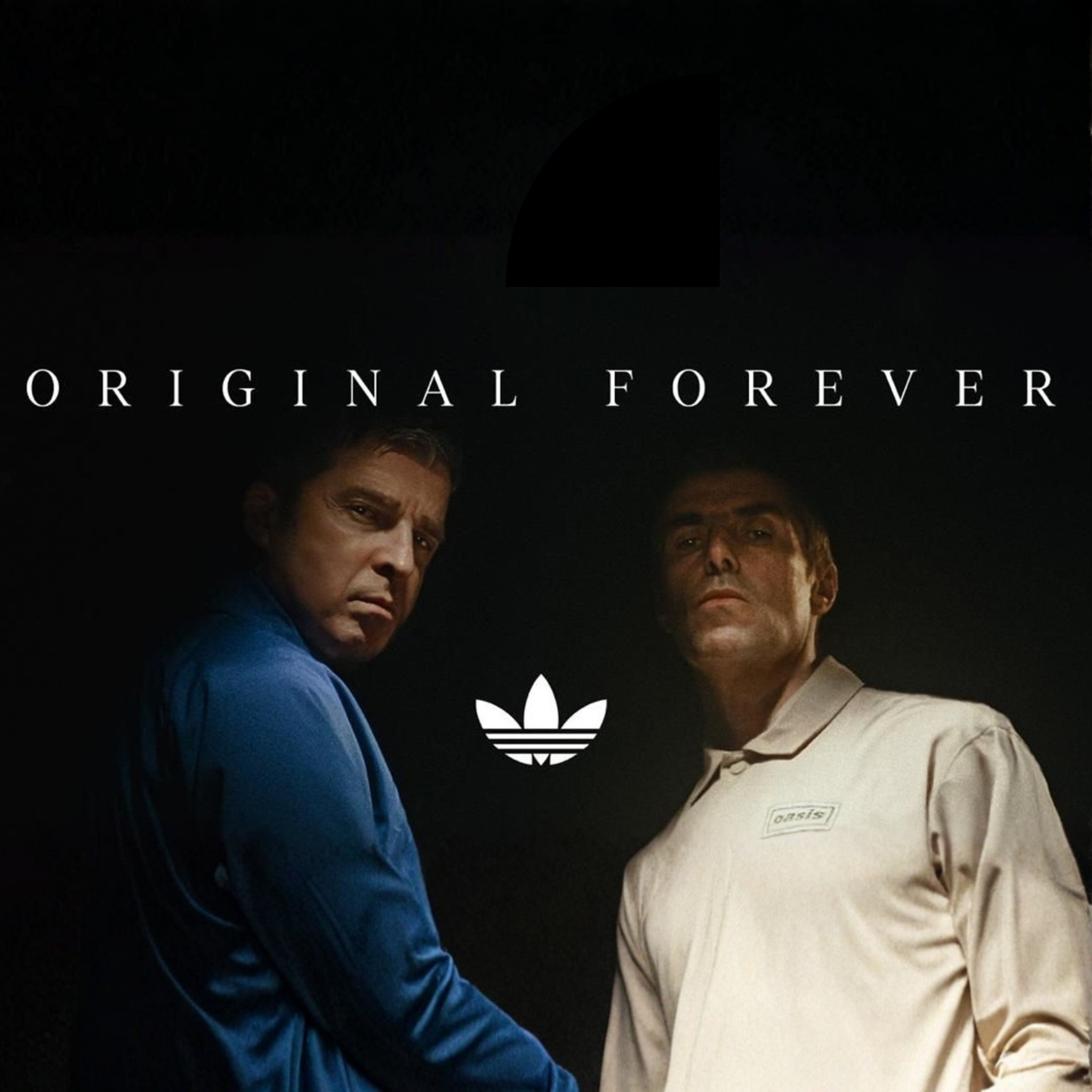
Few brands had as strong a week at Cannes 2026 as adidas, all thanks to its Original Forever campaign. Created by New York agency Johannes Leonardo, it won two Grands Prix, across Entertainment and Entertainment for Music, by building around Oasis’ long-awaited reunion and the band’s deep connection to the three stripes. Rather than simply licensing the music, the brand embedded itself in the tour – running pop-up shops and stadium stalls that, at its peak, shifted one sale per second. adidas also created a nostalgic music video set to 'Live Forever', linking the Oasis heyday with the modern fan experience and featuring as the opening act in 41 stadiums worldwide.
Its power lay in the precision of the fit. This was the right brand, the right band, the right moment and the right audience. Our Nostalgia Reimagined macro behaviour reframes nostalgia as not just about looking back but giving people a way to participate in a cultural return they already care about, and this is something the adidas campaign understood perfectly. Entertainment-led brand work wins when the brand is not interrupting fandom but adding to it; the strongest cultural partnerships serve the audience first.
Anthropic
Claude’s Film Craft Grand Prix-winning entry, created by Mother for Anthropic, took aim at one of the year’s most contested questions: Where should advertising not exist? The two films in the campaign, ‘Can I get a Six Pack Quickly?’ and ‘How Can I Communicate Better with My Mom?’, imagine the absurdity of AI tools serving ad-driven responses inside personal, emotionally loaded or practical conversations. They are funny, but the humour works because the underlying tension is serious. As AI becomes more embedded in everyday life, people are becoming more alert to the commercial incentives shaping the tools they use.
By positioning itself against advertising inside AI conversations, Claude made a product stance feel like a values stance. The insight here is that in high-stakes technology categories, winning work needs to go beyond feature superiority and make an abstract concern feel personally recognisable.
Clash Royale
Clash Royale’s Copycats Welcome won the Entertainment Lions for Gaming Grand Prix by turning a category irritant into a player-first growth strategy. As one of gaming’s major titles, Clash Royale had seen competitors copy its name, mechanics and characters. But rather than respond through legal aggression or defensive messaging, Supercell and DAVID New York built a campaign around respect for players’ time. The brand went into rival subreddits, called out copycat games directly and made players a simple offer: Switch to the original and keep the currency and levels they had already earned elsewhere.
The campaign achieved immediate scale, welcoming 2.3 million players who transferred their progress from knock-off titles in the first three days, not to mention 1.65 million new players. It was a smart inversion of the usual conquest playbook. The campaign acknowledged that players had invested time and effort in other games, even if those games were imitations. By protecting that investment, Clash Royale made switching feel fair rather than punitive.
Club Deportivo Municipal
Club Deportivo Municipal’s The Thousand Sponsors of Muni won the Entertainment Lions for Sport Grand Prix by reframing sponsorship as a community act rather than a corporate asset. After the historic Peruvian football club was relegated to the country’s third division, it lost its sponsors. But while commercial backing disappeared, fan loyalty remained. Working with McCann Peru, the club created a platform that allowed 1,000 small business owners to become official sponsors through micro-donations. The team jersey was redesigned to feature every sponsor, and participating businesses were allowed to tap players for promotional purposes.
The idea behind the campaign plays directly into our Solidarity Systems macro behaviour, which looks at how people are turning to community-led structures as trust in institutions declines. In three months, the club filled all sponsor slots and raised $254,000 in funding. But more importantly, it gave fans and grassroots businesses a stake in the club’s survival. The campaign resonated because it recognised that sport is more than elite performance or global fandom; for many, it functions as a local identity system, an economic network and a source of collective pride.
Uber Eats
Uber Eats’ Build Your Own Super Bowl Commercial won the Media Lions Grand Prix by turning one of advertising’s most watched formats into a participatory experience. Created by Special Los Angeles, the campaign extended Uber Eats’ long-running joke that American football was invented to sell food. But for the Super Bowl, the brand took that platform into the app, allowing users to build personalised versions of the ad through an interactive menu. Fans could choose characters, scenes and pieces of ‘evidence’, with thousands of possible versions unlocking tailored game-day deals.
Our Personal Worlds macro behaviour examines how people increasingly expect products, services and brand experiences to feel shaped around them. Uber Eats leveraged this logic, using personalisation not as a functional add-on but as the creative idea itself. This matters because the Super Bowl seems to be one of the last mass media advertising moments today, but Uber Eats treated it like a participatory platform rather than a broadcast slot. In an era where people are increasingly skipping ads, Uber Eats gave them an ad they could assemble themselves.
The Ordinary
To call out the use of meaningless jargon in the beauty industry, The Ordinary reimagined the scientific periodic table, replacing chemical elements with 49 marketing buzzwords – terms such as 'superfood-infused', 'medical-grade' and 'wrinkle-erasing' that carried no scientific backing. The campaign launched globally with striking OOH and a dystopian film directed by Olivia De Camps, showing a classroom of students in a trance-like state performing viral skincare rituals and chanting a series of 'elements'. A dedicated landing page let people explore exactly why each claim was meaningless.
The concept echoes our macro behaviour on Radical Transparency, which identifies how people are drawn to honesty and integrity from brands amid growing awareness of hidden agendas. In beauty, this tension is particularly sharp. Beauty buffs are not necessarily rejecting expertise, but they are becoming more sceptical of brands that use scientific cues without scientific discipline.
The Ordinary is a brand built on transparency from the start – plain packaging, ingredient-forward naming, no-nonsense pricing. The Periodic Fable is that philosophy scaled into a cultural intervention. Rather than simply telling people that skincare language has become confusing, the campaign made that confusion visible, recasting familiar buzzwords as fake scientific elements to expose how easily authority can be manufactured. For brands operating in trust-sensitive spaces, the lesson is that transparency works hardest when it goes beyond merely reassuring people to helping them decode the systems designed to overwhelm or mislead them.
AB InBev
AB InBev’s Creativity at Scale won the first-ever Creative Brand Grand Prix, signalling that Cannes Lions is not only rewarding great campaigns but the brands that know how to keep making them.
Unlike a traditional award for a singular output, this category recognises the structures behind the work: how a brand builds creative standards, gets teams aligned, protects good ideas and makes strong marketing across different brands and markets. AB InBev’s win showed that creativity is not just a spark that happens at the end of the process – it can be built into the way a business operates.
While some brands may treat creativity as the final layer that makes a product, campaign or message look more interesting once the strategy has already been decided, AB InBev points to a different model, where creativity is part of the business from the start and is given enough consistency to drive results over time. Given this, it’s clear that Grand Prix-level creativity is no longer just about one standout idea. Increasingly, it’s about whether a brand has the internal confidence, clarity and discipline to keep making work people care about.
Key learnings
Make work people would choose
As people become more practised at avoiding advertising, the strongest Cannes winners showed that brands need to create work that feels worth choosing on its own terms. adidas’ Original Forever worked because it became part of the Oasis reunion rather than a campaign built around it. Uber Eats turned a Super Bowl ad into something people could play with, while Claude used humour to make a serious point about where advertising should not appear. These campaigns did not rely on attention being forced, bought or chased – they offered people something with its own entertainment value, cultural relevance or emotional clarity. For brands, the opportunity is to be more honest about whether the work would still matter without the media spend behind it. The best advertising today does not just reach people where they are – it gives them a reason not to look away.
Use craft to show care
As AI tools make polished content easier to produce, visible craft is becoming a way for brands to show care, effort and intention. Apple TV’s rebrand stood out because it used glass, light, colour and sound to create something that felt deliberately human-made. Claude’s films used humour and detail to make a complex AI debate feel everyday and relatable. The Ordinary used cinematic world-building to expose how confusing beauty language can be. In each case, craft was not just there to make the work look good – it helped communicate the brand’s point of view. For brands, this means craft should be treated as part of the strategy, not a final decorative layer. Audiences may not always know exactly how something was made, but they can often sense when an idea has been handled with care.
Turn audiences into stakeholders
People are more likely to engage with brand work when they are given a meaningful role in it. Across this year’s Grand Prix winners, some of the strongest campaigns moved audiences from spectators to participants, giving them a stake in how the idea showed up or what it achieved. Club Deportivo Municipal turned domestic businesses into official sponsors, making fans part of the club’s recovery rather than simply asking them to support from the sidelines. Uber Eats let viewers shape their own version of a Super Bowl ad, while Clash Royale gave players a practical reason to move back to the original game without losing the progress they had built elsewhere. For brands, the opportunity lies in designing campaigns that create a sense of agency, ownership or contribution; rather than treating audiences as people to be reached, the most effective work gives them a role to play.